Leather Dice Cups and Backgammon Boards, Made by Hand
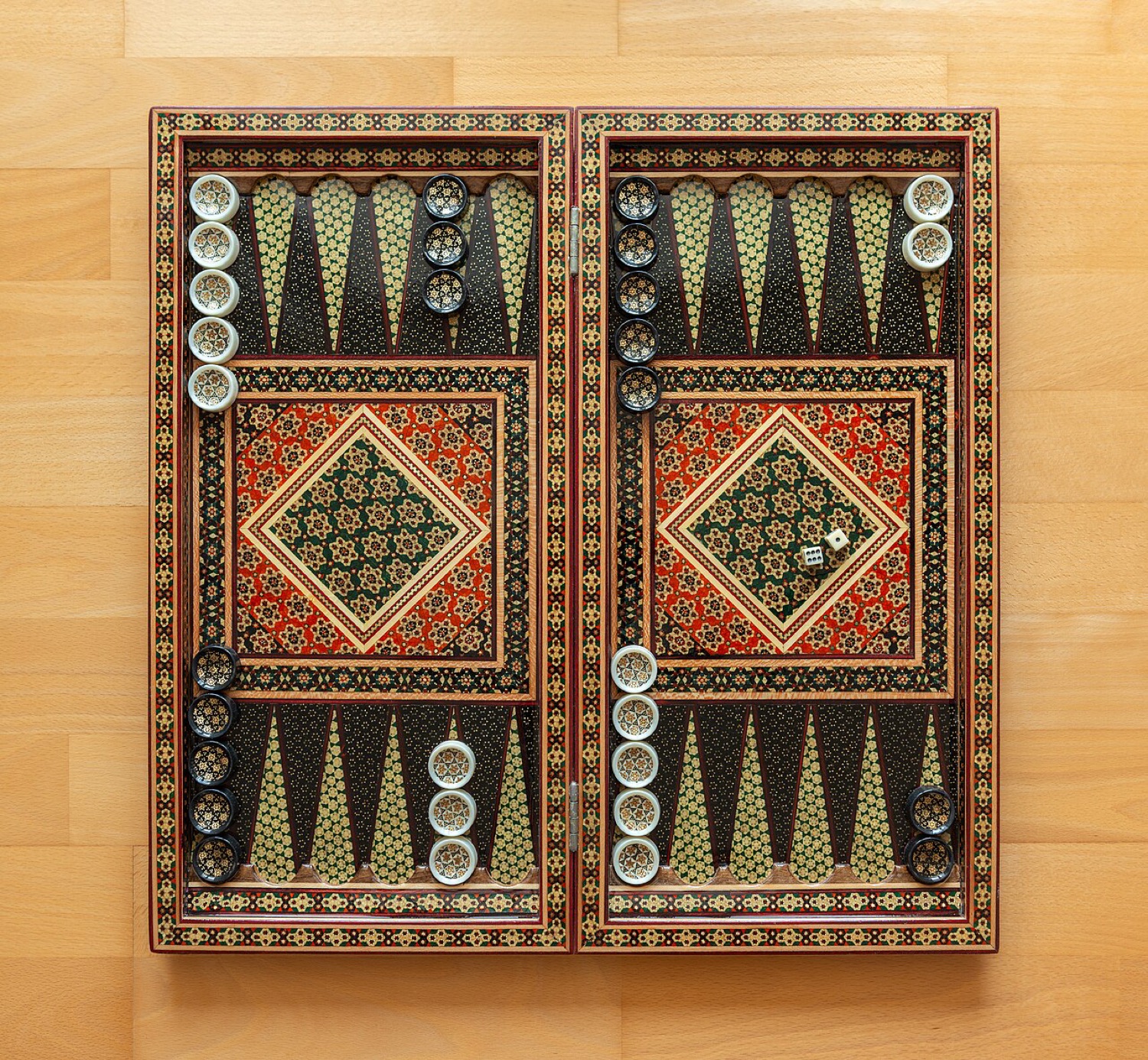
Long before card cases and laptop sleeves, leatherworkers made dice cups. A shaken cup is the fairest way to throw dice, and the satisfying thud of leather on wood is half the pleasure of games like backgammon and the dice games played in bars. A good cup is a small, honest object that shows off a maker's skill.
How a dice cup is made
Most leather cups are made from a rectangle of firm vegetable-tanned leather, wet-formed around a wooden mould and stitched up the side with a saddle stitch. A round base is stitched or glued in. Inside, the cup is often ribbed or lined with a lip, so the dice tumble rather than slide out in the order they went in. The outside may be tooled, embossed or left plain to darken with use.
- Firm leather around 3 to 4 mm thick keeps the cup round.
- A stitched seam outlasts glue, especially on a cup that gets slammed on a table.
- A lip or ribs inside make the roll properly random.
- Felt on the base keeps it quiet and kind to the board.
Backgammon boards
Backgammon is one of the oldest board games still played, and boards range from folding vinyl cases to inlaid wooden masterpieces such as Persian khatam marquetry. Leather-covered boards are a classic of English and Italian makers, with the playing field in felt or cork and the points inlaid in contrasting leathers.
The doubling cube
The game changed for good in the 1920s, when players in New York clubs began using a doubling cube. Either player may offer to double the stakes; the other must accept or concede. The cube turned backgammon into a game of nerve as much as skill and made it a staple of money play in clubs and later in casino tournaments.
Other cup games
Cups are also used for liar's dice and for the bar dice games played across the American Midwest, where a round of drinks often depends on a shake. Casino craps is the exception: dice there are thrown by hand against a rubber-studded wall, and the dice themselves are precision-made, with sharp edges and serial numbers. We look at that kind of precision in our feature on the roulette wheel.
A leather cup takes on a patina faster than almost any other leather good, because it is handled, shaken and banged on a table every game. Ten years in, a good one looks better than it did new.
You might also like

The Bike That Starts It All: Getting Into Custom Bicycle Building
Most custom builders can name the one bike that started the habit. How to go from a stripped-down frame to your first build without a full workshop.

Restoring a Vintage Slot Machine Cabinet
Old mechanical slot machines are cast metal, oak and clockwork. How collectors restore the cabinet and mechanism, and what to check before you buy one.

Leather Tablet Sleeves With Snaps: Simple, Fast, Protective
A sleeve that fastens with snaps instead of a zip is quicker to use and kinder to the screen. How the design works and what separates a good one from a floppy one.