Saddle Stitching by Hand: Why Two Needles Beat a Machine
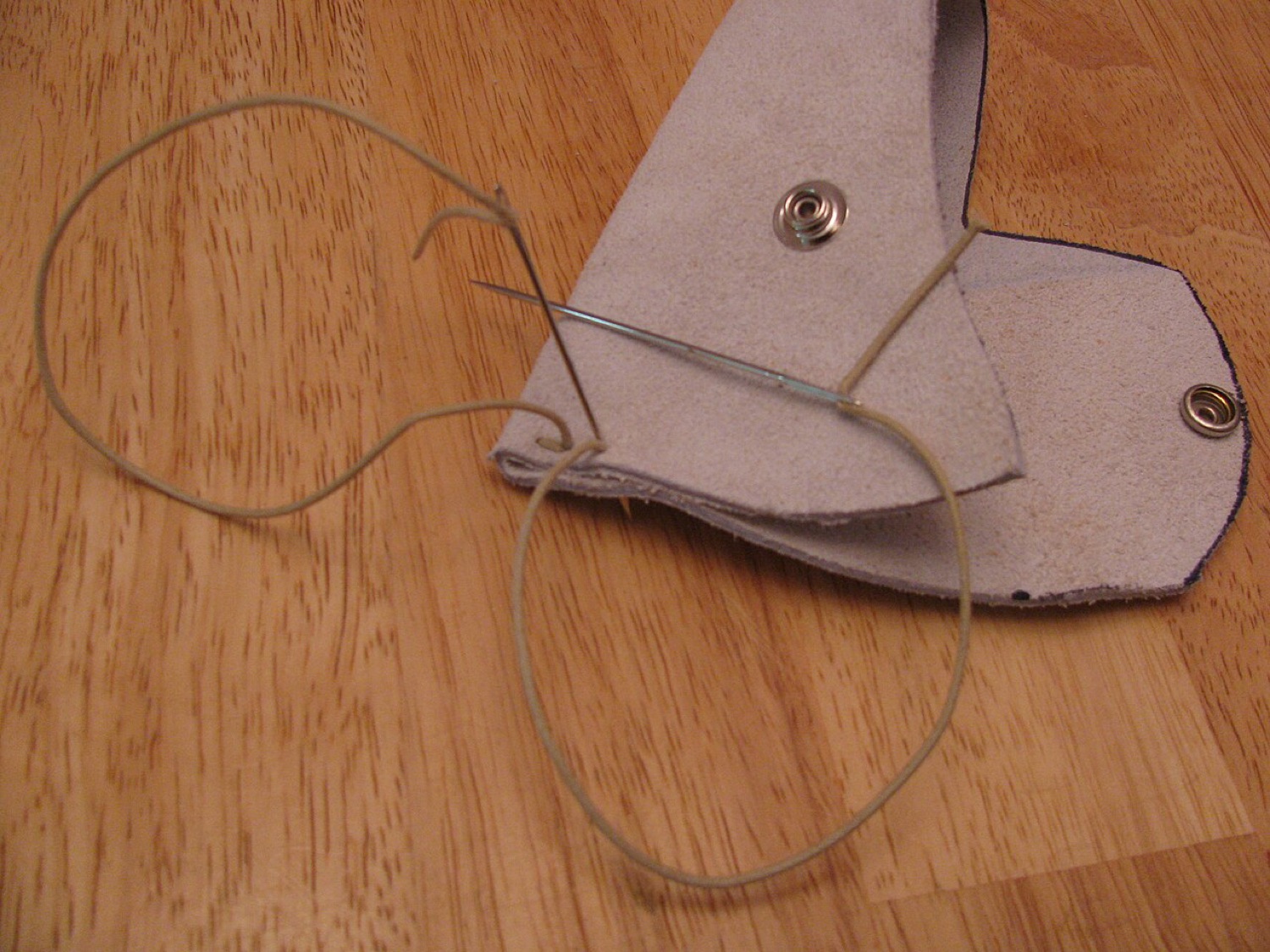
The saddle stitch is the signature of hand-made leather goods. It is slow, it needs no machine, and it produces a seam that is stronger in one crucial way than anything a standard sewing machine can make.
How it works
One length of waxed thread is fitted with a needle at each end. The maker punches a row of holes, then passes both needles through each hole from opposite sides, pulling the thread tight after every stitch. Each hole is crossed twice, by the same thread.
A sewing machine makes a lockstitch instead: an upper thread loops around a lower bobbin thread inside the material. It is fast and neat, but if one stitch breaks, the seam can begin to unravel. With a saddle stitch, a broken stitch stays a broken stitch; the threads on either side are still locked in place.
The tools
- Stitching chisels or pricking irons, to mark and punch evenly spaced, slanted holes.
- Two blunt harness needles.
- Waxed linen or braided polyester thread.
- A stitching pony or clam, which holds the work between the knees.
- A groover, to cut a shallow channel so the thread sits below the surface.
Spotting it on finished goods
Look at both faces of the seam. A good hand saddle stitch shows neat, slanted stitches on both sides. A machine lockstitch looks straight on top and slightly different underneath. Hand stitching also tends to be a little bolder, with more thread showing.
When rivets and studs win
Not every piece needs stitching. Minimal designs often use duty studs or rivets instead, which hold a fold without any seam. Many makers mix both: stitched pockets, riveted stress points.
Stitched leather is everywhere once you notice it: on a saddle, a watch strap, a baseball glove, even the padded rail of a poker table, where upholsterers hide their seams under the edge. Our guide to how poker table rails are built shows that side of the craft.
You might also like

The Bike That Starts It All: Getting Into Custom Bicycle Building
Most custom builders can name the one bike that started the habit. How to go from a stripped-down frame to your first build without a full workshop.

The Roulette Wheel as a Piece of Precision Engineering
A roulette wheel is turned wood, polished metal and precision bearings, and it has to be perfectly level and balanced. How wheels are built and why casinos check them.

The Zip Card Wallet: Minimalism in Your Pocket
A single zip pocket for cards and folded notes: the low-carb version of the overstuffed wallet. What to look for in the zip, the leather and the size.